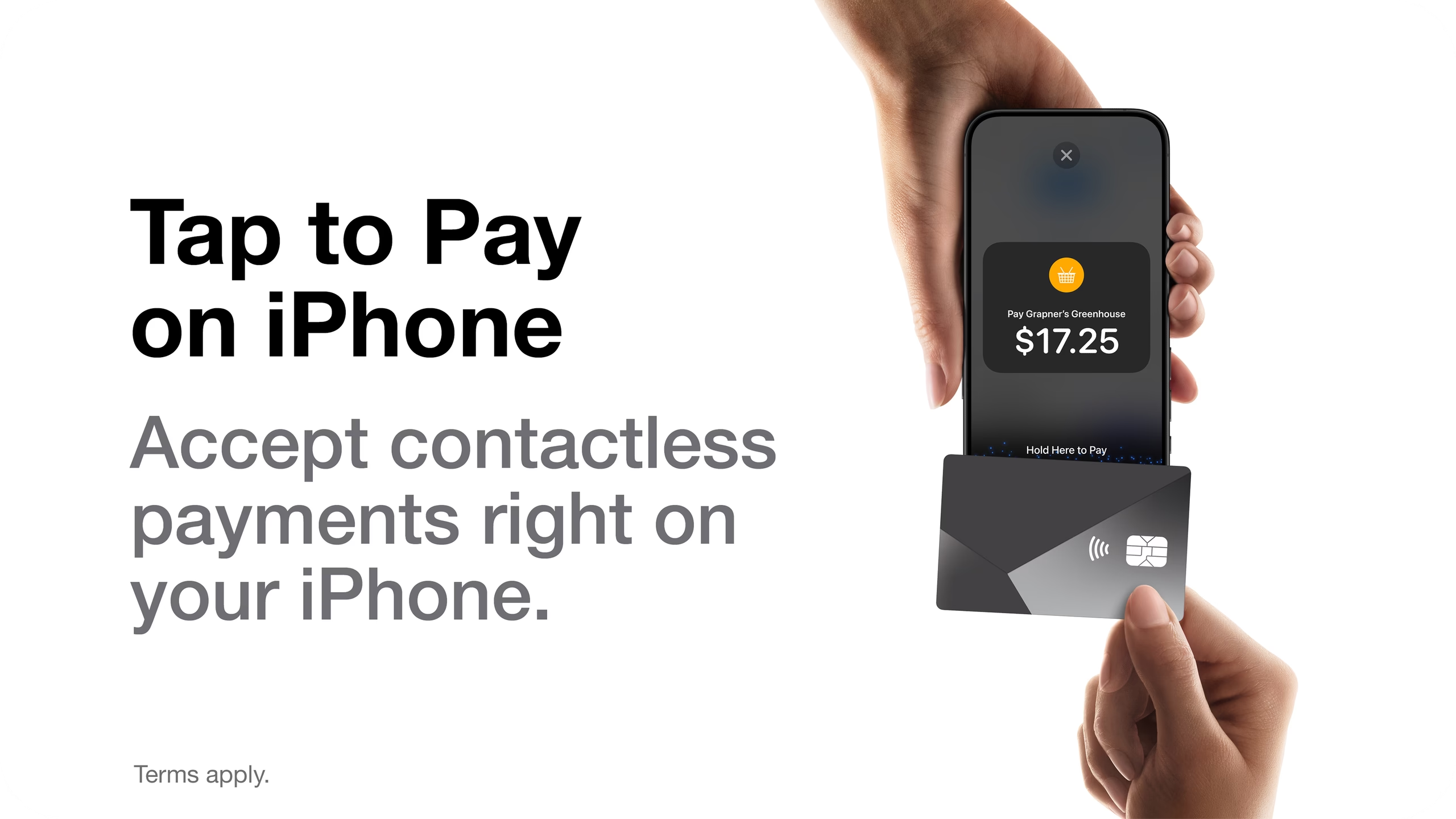
Tap to Pay on iPhone
AutoLNK Tickets is a car show ticketing platform built for automotive events. It delivers tickets instantly by SMS and Apple Wallet, scans them on any phone your crew already carries, and lets you sell tickets for a car show at the gate with Tap to Pay on iPhone—no card reader and no third-party scanner app. As an automotive ticketing platform, it’s built around vehicles, vendors, and media rather than seat numbers, which makes it the practical alternative for car shows.
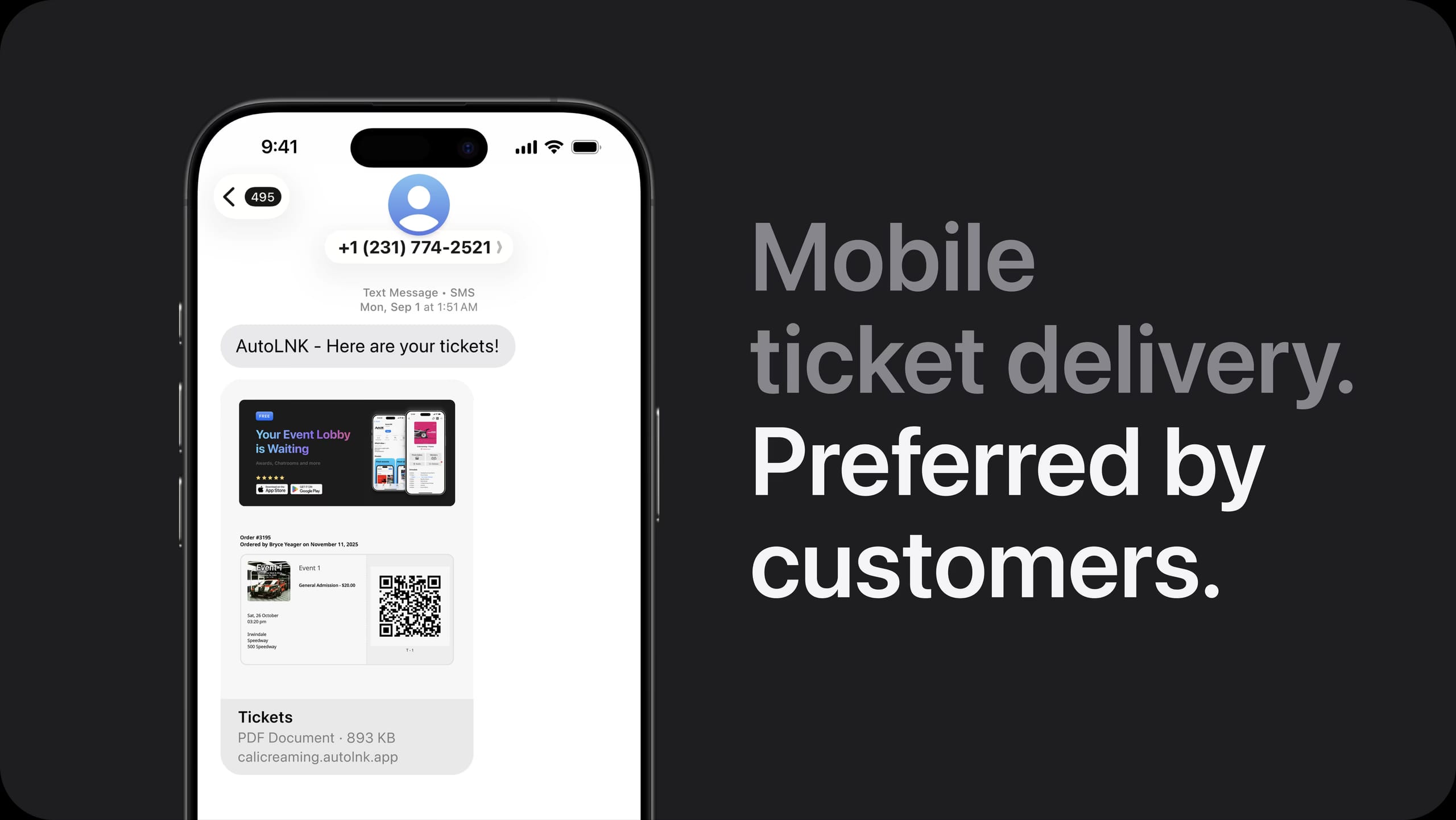
Mobile ticket delivery
Tickets arrive by SMS the moment someone buys, so they’re on the phone the attendee already has in their hand rather than buried in an email thread. Nothing to download, no PDF attachment to hunt for at the gate, and no lost confirmation to troubleshoot.
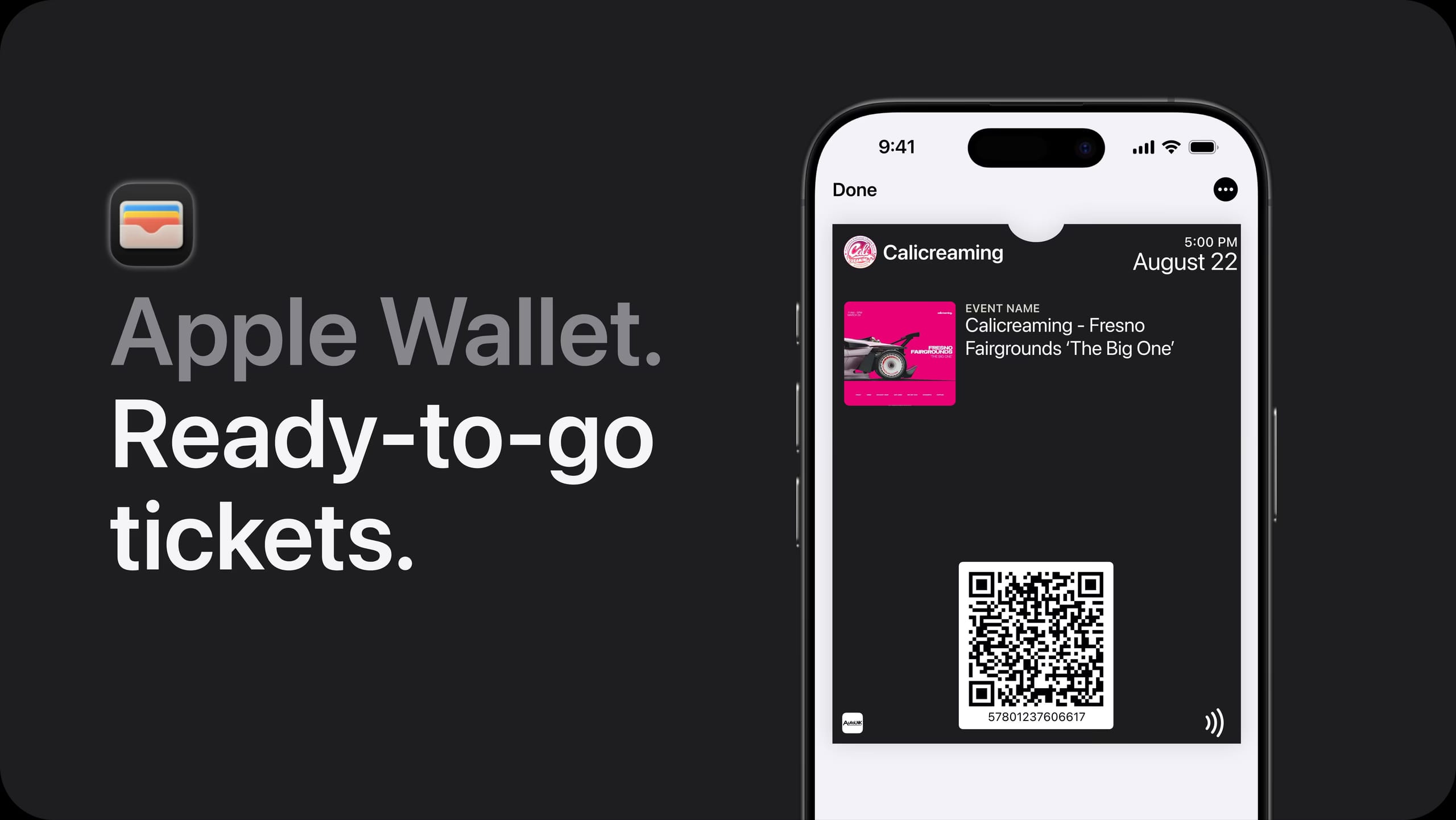
Apple Wallet
Tickets save to Apple Wallet in one tap and surface on the lock screen when the attendee arrives, so entry doesn’t depend on finding a screenshot or waiting for an inbox to load. Wallet passes also work without a signal, which matters at the fairgrounds, raceways, and open lots where automotive events actually happen and reception is unreliable. The practical result is a faster scan and a gate that keeps moving.
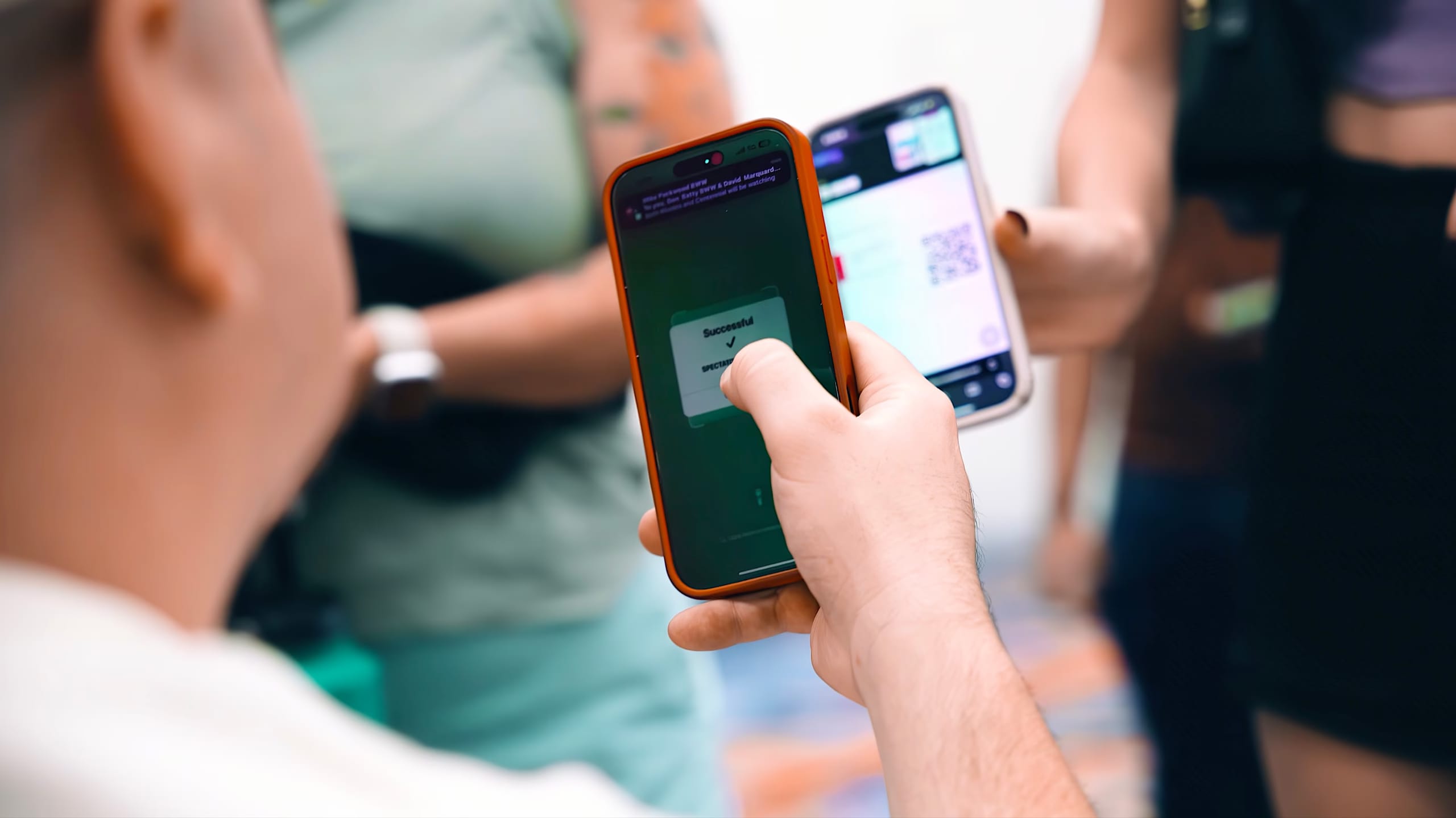
Ticket scanning you
can count on.
Fast
Easy
Reliable
The tools you need on event day.
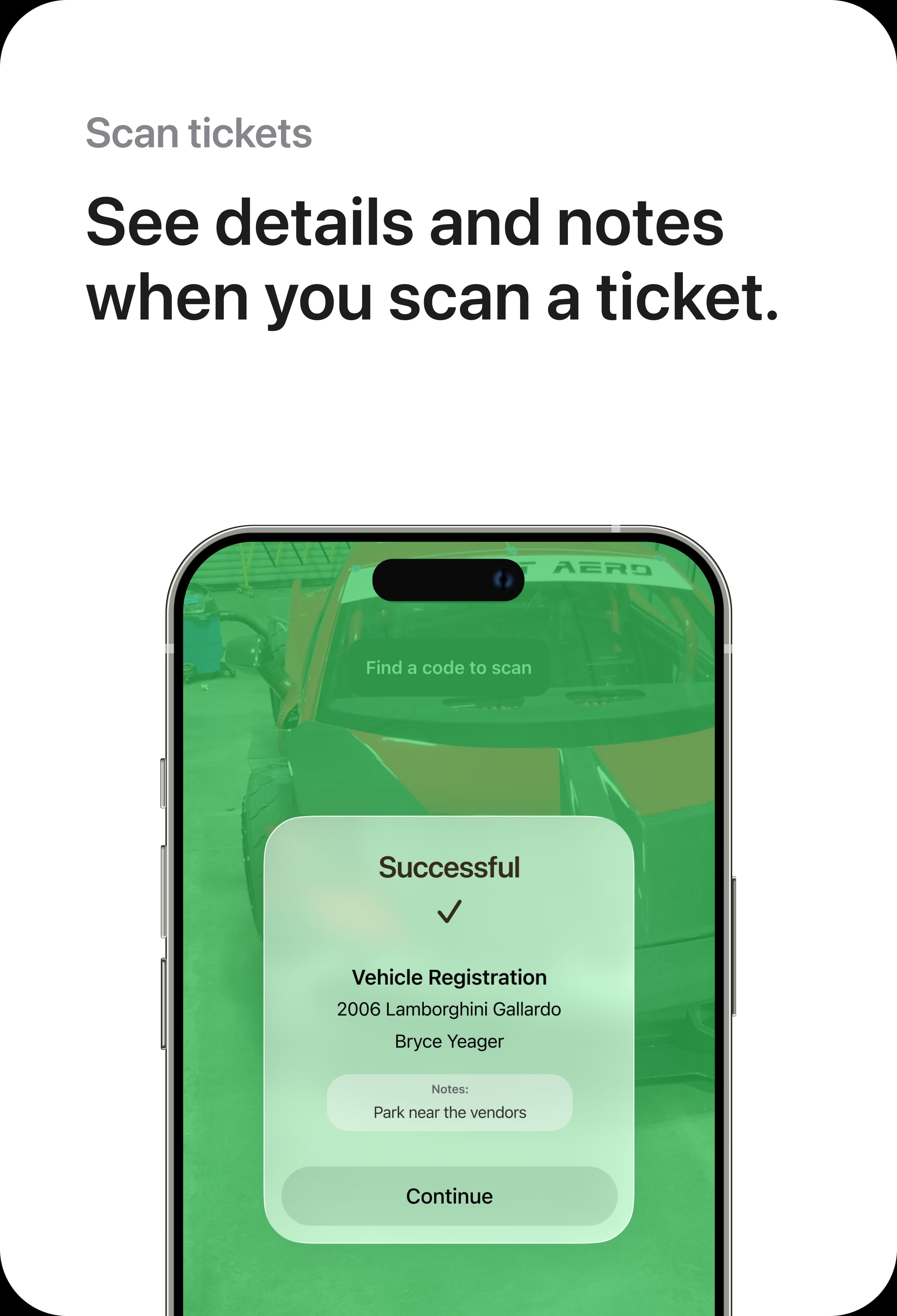
Scan tickets
Every scan surfaces who the ticket belongs to and what they’re bringing: name, vehicle details, vendor or media type, and any note the organizer attached to that entry. That turns the gate into a decision point instead of a bottleneck: staff know immediately whether a car is a show entry or general parking and where to send it.
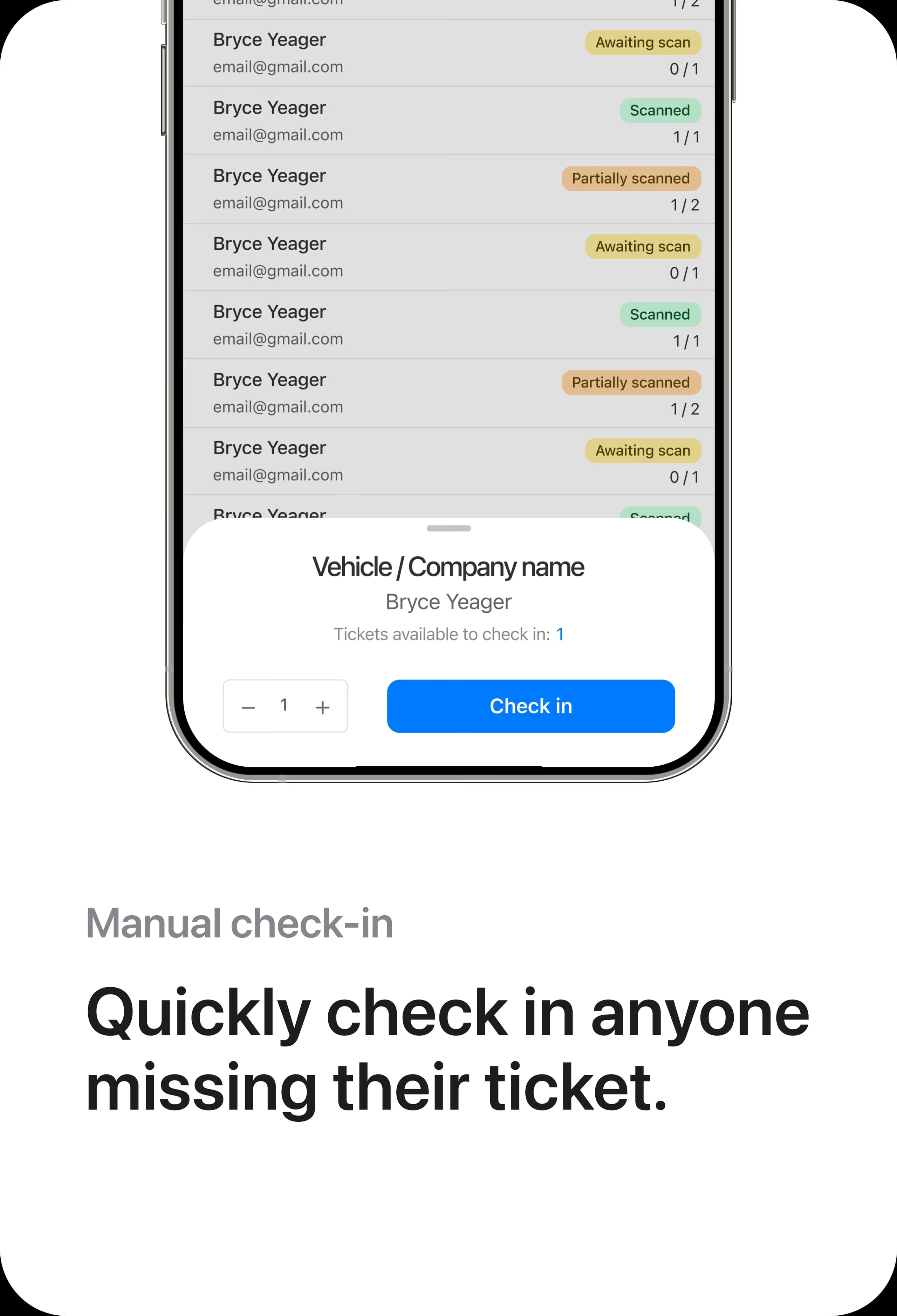
Manual check-in
Real gates produce edge cases: a dead phone, a forgotten ticket, or a name that doesn’t match the order. Manual check-in lets staff look someone up and admit them without a scan, so one unusual case doesn’t stall the line behind it. Partial check-ins are handled too, which matters when a single order covers several people or vehicles arriving separately. You keep control of who gets in without the process depending on everyone’s phone working.
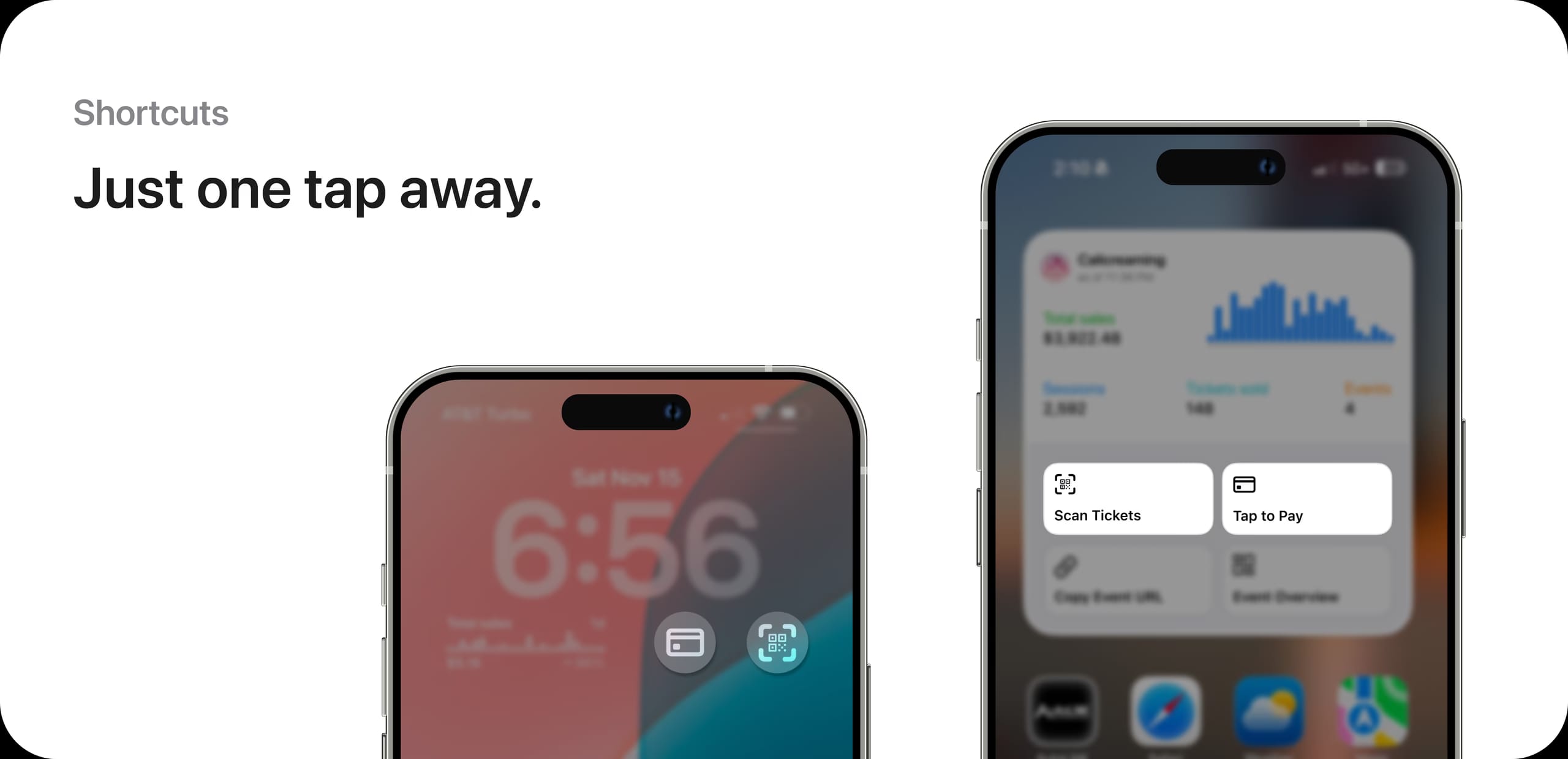
Shortcuts
The tools you actually use on event day sit one tap from the home and lock screen: ticket scanning, taking a payment, and the event overview. During a show, the difference between one tap and four is the difference between a gate that flows and a queue that builds, and staff shouldn’t be navigating a dashboard while cars are waiting. It also means a volunteer who arrived ten minutes ago can be useful immediately.